Why Knotweed Matters So Much
Japanese knotweed is a fast-growing invasive plant that can damage hard surfaces, drains and, in some cases, structures if left unmanaged close to a building. Because of this, most mainstream mortgage lenders use a standard risk-based scale (from the RICS knotweed guidance) to decide whether to lend, and on what terms, when knotweed is present on or near a property.
How to Identify It
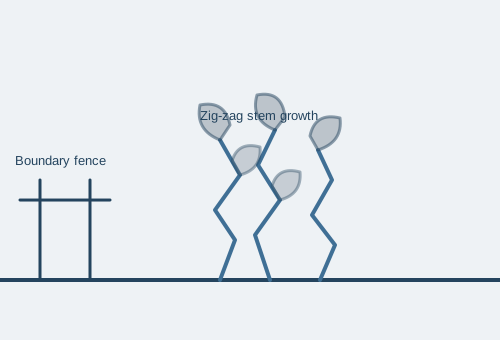
- Shield or heart-shaped green leaves in a distinctive zig-zag pattern along reddish-green stems
- Hollow, bamboo-like stems, often with purple speckles
- Clusters of small cream-white flowers in late summer
- Rapid growth — up to 10cm a day during peak summer season
- Dense, thicket-like stands, often along boundaries, railway land or waste ground
It's easiest to identify in summer when in full leaf and flower; in winter it dies back to brown, dead-looking canes, which can make it harder to spot during a winter survey — worth flagging to your surveyor if you know the garden had visible growth earlier in the year.
What a Surveyor Checks
During a Level 2 or Level 3 survey, we visually inspect the garden, boundaries and any land within reasonable view of the property for signs of knotweed (live or dead canes), and note the approximate distance from the building if found. We also look at neighbouring gardens and adjacent land visible from the property, since knotweed spreading from a neighbour's land is a common scenario in London's densely packed gardens.
What Happens If Knotweed Is Found
- Distance assessment — the closer to habitable buildings, the higher the risk category.
- Specialist survey — a knotweed specialist (not your building surveyor) will usually need to confirm the extent and produce a management plan.
- Treatment plan — typically a multi-year herbicide programme (2–5 years) or excavation, backed by an insurance-backed guarantee lenders will accept.
- Renegotiation — many buyers ask the seller to fund treatment or reduce the price to cover the cost, which usually ranges from roughly £1,000–£5,000+ depending on the treatment method and extent.